Water turns cold quickly
Note how long the hot water lasts, whether household usage changed, and whether the problem occurs at every fixture.
Focused help for Tooele homeowners
No hot water, a leaking tank, uneven temperatures, or a unit making new noises? Understand the likely next step and connect with an independent provider to discuss repair or replacement options.
Independent service connection. Provider availability varies by location and coverage.
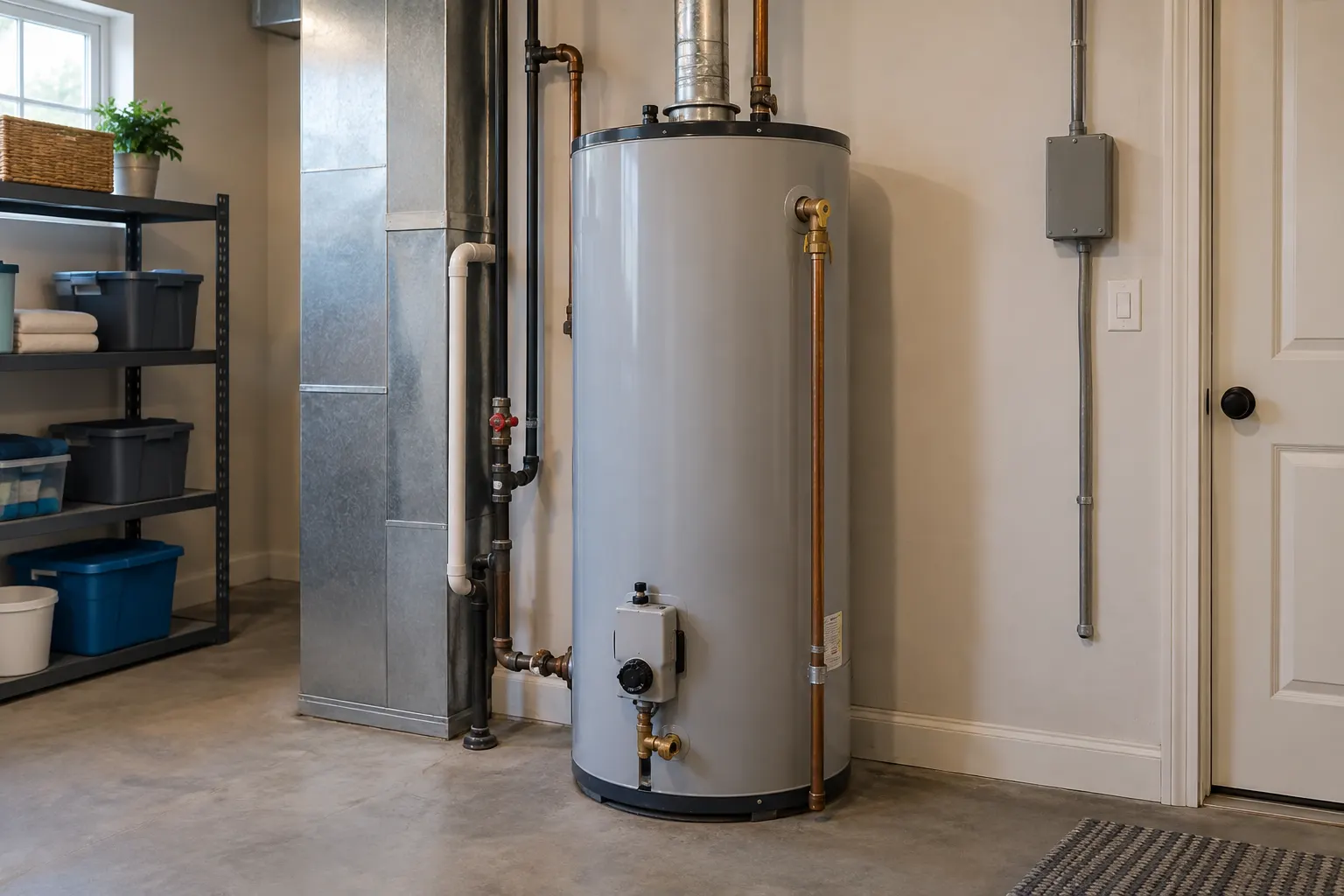
Start with the symptom
You do not need to diagnose the equipment yourself. Choose the symptom that best matches what you see, then note a few details that can make a service conversation more useful.
The whole home is cold, or hot water stopped suddenly.
Learn what to noteWater is visible around the tank, fittings, or nearby floor.
Learn what to noteWater is lukewarm, inconsistent, or runs cold too soon.
Learn what to notePopping, rumbling, banging, or new operating sounds are present.
Learn what to noteHeating returns briefly, then drops again or recovers slowly.
Learn what to noteAge, tank condition, and repeated failures can shape the decision.
Learn what to noteFocused local guidance
A water-heater problem can affect bathing, cleaning, laundry, and a home's rhythm. Describe the symptom clearly without taking equipment apart.
Tooele homeowners may have a conventional gas or electric storage tank, or a tankless system. A provider may ask about fuel type, visible controls, equipment age, when the problem started, and whether it affects the entire home.
A professional assessment may make sense when hot water has stopped, temperature changes persist, water is visible, or the unit begins operating differently. The assessment can clarify whether repair or replacement is worth discussing. Service capabilities can vary by provider and equipment type.
This site is designed for Tooele, UT and the 84074 area, but it is not a plumbing contractor or a local office. It provides practical information and helps callers connect with independent service providers, subject to coverage and availability.
Problem guide
A complete loss of hot water may follow a household power interruption, a tripped breaker, a pilot or ignition issue, a control problem, a failed electric heating element, a burner condition, or aging equipment.
The pattern matters. Note whether the change was sudden, whether every fixture is affected, and whether the unit displays a code. Do not remove access panels, bypass a safety control, relight unfamiliar gas equipment, or test energized components based on general online advice.
Treat visible water seriously
Water near the equipment does not always reveal its source. It can appear around the tank, supply connections, pressure-relief area, drain valve area, or nearby plumbing.
A small amount of visible water can spread across flooring or follow pipes before it is noticed. Record where you first saw it, whether it is actively increasing, and whether nearby walls, stored items, or flooring are getting wet. Avoid dismantling fittings or controls to investigate.
A leak at a connection may lead to a different repair discussion than a tank-body leak. A technician can determine the source and whether repair is reasonable. If water is spreading near electrical equipment, gas equipment, or creating an immediate hazard, avoid unsafe contact and seek appropriate professional assistance.
Temperature and capacity
Lukewarm water, changing temperatures, a supply that runs cold quickly, long recovery times, and reduced capacity can all feel similar at the faucet—but they may not share the same cause.
Note how long the hot water lasts, whether household usage changed, and whether the problem occurs at every fixture.
Describe whether water fluctuates during one use or differs by fixture. Avoid changing unfamiliar controls.
Mention whether the change developed gradually or suddenly and whether the household recently began using more hot water.
Possible explanations can involve heating components, controls, fuel or power supply, water demand, equipment sizing, buildup, or age. These symptoms are useful clues, not a diagnosis. A service provider can assess the equipment and explain the relevant options.
Sounds and equipment age
Popping, rumbling, banging, or unfamiliar operating sounds can be related to several conditions. Some may involve sediment or normal expansion; others can point to a component or operating issue.
Sound alone rarely proves exactly what has failed. Pay attention to when it occurs—during heating, when a fixture opens, or after hot-water demand ends—and whether it is becoming more frequent or louder.
Older equipment is not automatically beyond repair, and a newer unit is not automatically an economical repair. Condition, tank integrity, the affected component, previous problems, and the cost of the proposed work all matter. A technician can determine what the sound may indicate and whether maintenance, repair, or replacement should be discussed.
A practical decision
The right direction depends on the equipment, the specific problem, and the household—not on one rigid age rule.
Age is only one factor. Ask the provider to explain the diagnosis, proposed scope, expected value of the repair, and suitable replacement choices so you can compare the paths clearly.
A major secondary option
When repair is not practical, an independent provider can discuss available options for the home, existing connections, and expected hot-water demand.
A conventional tank replacement may be the most direct choice for a home already designed around that system. Capacity should reflect the household’s normal use, not only the physical size of the old tank. Fuel type also matters: gas and electric models have different installation needs, operating characteristics, and site requirements.
Tankless equipment can be worth discussing when space, long-term usage patterns, efficiency goals, and installation conditions align. It is not automatically the best fit for every property. Existing gas, electrical, venting, water-quality, and flow requirements may affect the scope.
Ask about efficiency, capacity, installation requirements, included work, applicable permits, and removal or disposal of old equipment where available. The independent provider should explain the proposed equipment and handle its own pricing, scheduling, warranties, and service agreement.
Know your equipment
You do not need technical expertise before calling. Identifying the broad equipment type helps the provider understand what may be involved.
Typically uses a burner and venting. Mention pilot, ignition, or visible control behavior, but do not adjust gas components.
Electric units use heating elements, thermostats, and controls. Problems can appear as no hot water, lukewarm water, or slow recovery. Note any household power interruption, but do not remove panels or test live wiring. A provider can identify the cause and appropriate repair options.
Heats water on demand and may show a code. Record a clearly visible code and model details without opening the cabinet.
Stay at the observation level
Simple and transparent
Choose the closest symptom and gather a few safe observations about the equipment.
Use the displayed number once activated to connect and explain what is happening.
A provider can discuss coverage, scheduling, scope, options, and pricing for your inquiry.
Service-area focus
This site focuses on homeowners seeking water-heater assistance in Tooele, Utah, particularly ZIP 84074. It uses the city and ZIP to keep the information relevant—not to suggest a storefront or contractor office.
□ Tank or tankless
□ Gas or electric, if known
□ Approximate unit age
□ Visible leaking
□ Current symptoms
□ Any hot water at all
□ Clearly visible error code
□ ZIP and location
□ Preferred availability
Provider coverage varies. Confirm availability for your location and discuss all scheduling and service terms directly with the independent provider.
Common questions
Clear answers to help you prepare for a repair or replacement conversation.
A sudden loss of hot water can be related to a household power interruption, a tripped breaker, a pilot or ignition issue, a control or thermostat problem, a failed electric heating element, a burner-related issue, or aging equipment. Avoid opening panels or handling gas components. Note what the unit is doing and discuss the symptoms with a qualified provider.
It depends on where the water originates. A fitting, valve area, or nearby plumbing connection may present a different situation from a tank that is leaking. Because water can travel before it becomes visible, a professional assessment can help identify the source and whether repair is practical.
Replacement may be discussed when the tank itself is compromised, problems keep returning, the equipment is older, or the cost of a repair is difficult to justify compared with a suitable replacement. Age is only one factor; condition, repair scope, efficiency, and household needs also matter.
Yes. Gas and electric units use different heating systems, controls, connections, and safety procedures. Tell the provider which type you have if you know. Service capabilities can vary by provider and equipment type.
Many tankless problems can be assessed, but the available service may depend on the model, error code, fuel type, installation, and provider capabilities. Record any clearly visible error code without opening the equipment.
Helpful details include whether the unit is tank or tankless, gas or electric, its approximate age, current symptoms, visible water, any display code, whether there is any hot water, your location, and scheduling preferences.
Not necessarily. Popping, rumbling, or banging can have several causes, including conditions related to sediment, heating, water flow, or aging components. A technician can determine whether the sound points to maintenance, repair, or a larger equipment concern.
Visible water deserves prompt attention because the source and rate can change and surrounding materials may be damaged. If water is spreading near electrical or gas equipment or creating an immediate hazard, avoid unsafe contact and seek appropriate professional assistance.
This website focuses on water-heater inquiries in Tooele, Utah, particularly 84074. Actual coverage and appointment availability vary by independent provider, so confirm your address or ZIP when you call.
Cost depends on the diagnosis, unit type, parts, labor, access, and whether replacement is appropriate. Ask the provider about diagnostic charges, scope, warranties, payment terms, and scheduling before authorizing work.
Repair or replacement guidance
Connect with an independent service provider to discuss availability, your water-heater problem, scheduling, and service options.
Independent service connection. Provider availability varies by location and coverage.